

“The new device is built from arrays of resistive random-access memory (RRAM) cells… The team was able to combine the speed of analog computation with the accuracy normally associated with digital processing. Crucially, the chip was manufactured using a commercial production process, meaning it could potentially be mass-produced.”
Article is based on this paper: https://www.nature.com/articles/s41928-025-01477-0
It uses 1% of the energy but is still 1000x faster than our current fastest cards? Yea, I’m calling bullshit. It’s either a one off, bullshit, or the next industrial revolution.
EDIT: Also, why do articles insist on using ##x less? You can just say it uses 1% of the energy. It’s so much easier to understand.
I mean it‘s like the 10th time I‘m reading about THE breakthrough in Chinese chip production on Lemmy so lets just say I‘m not holding my breath LoL.
Yeah it’s like reading about North American battery science. Like yeah ok cool, see you in 30 years when you’re maybe production ready
I’m ready for this entire category of “science blog” website to disappear. Mainstream media are bad enough at interpreting movements in science, but these shitty little websites make their entire living off of massively overblowing every little thing. Shame on OP and anyone who posts this kind of garbage.
But it only does 16x16 matrix inversion.
Oh noes, how could that -possibly- scale?
To a billion parameter matrix inverter? Probably not too hard, maybe not at those speeds.
To a GPU, or even just the functions used in GenAI? We don’t even know if those are possible with analog computers to begin with.
I would imagine there’s a kernel of truth to it. It’s probably correct, but for one rarely used operation, or something like that. It’s not a total revolution. It’s something that could be included to speed up a very particular task. Like GPUs are much better at matrix math than the CPU, so we often have that in addition to the CPU, which can handle all tasks, but isn’t as fast for those particular ones.
They’re real, but they aren’t general purpose and lack precision. It’s just analog.
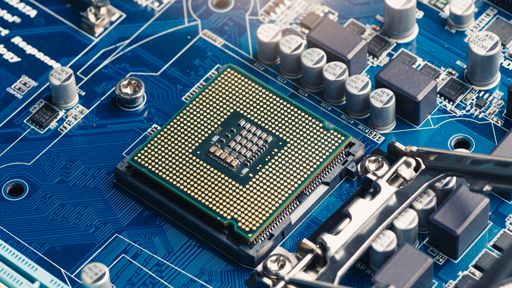
For the love of Christ this thumbnail is triggering, lol
Just push ever so slightly more when you hear the crunching sounds.
Then apply thermal paste generously
Pour a bucket of water over it for liquid cooling
Why? It’s standard socket in SMOBO design (sandwich Motherboard).
(x) Doubt.
Same here. I wait to see real life calculations done by such circuits. They won’t be able to e.g. do a simple float addition without losing/mangling a bunch of digits.
But maybe the analog precision is sufficient for AI, which is an imprecise matter from the start.
This was bound to happen. Neural networks are inherently analog processes, simulating them digitally is massively expensive in terms of hardware and power.
Digital domain is good for exact computation, analog is better for approximate computation, as required by neural networks.
That’s a good point. The model weights could be voltage levels instead of digital representations. Lots of audio tech uses analog for better fidelity.I also read that there’s a startup using particle beams for lithography. Exciting times.
Look, It’s one of those articles again. The bi-monthly “China invents earth-shattering technology breakthrough that we never hear about again.”
“1000x faster?” Learn to lie better. Real technological improvements are almost always incremental, like “10-20% faster, bigger, stronger.” Not 1000 freaking times faster. You lie like a child. Or like Trump.
Because until it hits market, it’s almost meaningless. These journalists do the same shit with drugs in trials or early research.
I agree that before it’s a company selling a product it’s just dreams.
However this is serious research. Skip the journo and open the nature.com link to the scientific article.
For the ones not familiar with nature, it’s a highly regarded scientific magazine. Articles are written by researchers not journalists.
It can be 1000x faster because it analog. Analog things take very very little time to compute stuff. We don’t generally use them because they are very hard to get the same result twice and updating is also hard
1000x!
Is this like medical articles about major cancer discoveries?
yes, except the bullshit cancer discoveries are always in Israel, and the bullshit chip designs are in china.
1000x yes!
Yes. Please remember to downvote this post and all others that are based on overblown articles from nobody science blogs.
sounds like bullshit.
read the paper
The problem is with the clickbait headline (on livescience.com), not the paper itself.
Ahh yeah and we should 1. Believe this exists 2. Believe that china doesnt think technology of this caliber isnt a matter of national security
> See article preview image > AI crap CPU > Leaves immediatelyThis already a thing, there’s a US lab doing this
cool
Who is China? Why is it so smart?
West Taiwan. Because The Great Ruling Party said so.
Edit: I removed a chatgtp generated summary because I thought it could have been useful.
Anyway just have a good day.I appreciate that you wanted to help people even if it didn’t land how you intended. :)
It was a decent summary, I was replying when you pulled it. Analog has its strengths (the first computers were analog, but electronics was much cruder 70 years ago) and it is def. a better fit for neural nets. Bound to happen.
Nice thorough commentary. The LiveScience article did a better job of describing it for people with no background in this stuff.
The original computers were analog. They were fast, but electronics was -so crude- at the time, it had to evolve a lot … and has in the last half-century.