

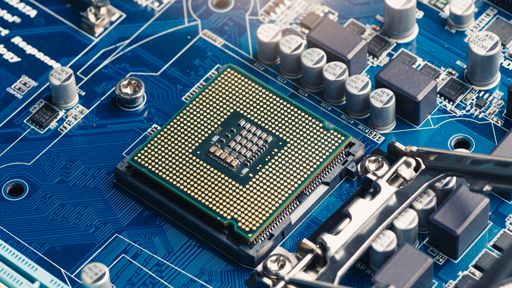
“The new device is built from arrays of resistive random-access memory (RRAM) cells… The team was able to combine the speed of analog computation with the accuracy normally associated with digital processing. Crucially, the chip was manufactured using a commercial production process, meaning it could potentially be mass-produced.”
Article is based on this paper: https://www.nature.com/articles/s41928-025-01477-0
Look, It’s one of those articles again. The bi-monthly “China invents earth-shattering technology breakthrough that we never hear about again.”
“1000x faster?” Learn to lie better. Real technological improvements are almost always incremental, like “10-20% faster, bigger, stronger.” Not 1000 freaking times faster. You lie like a child. Or like Trump.
Because until it hits market, it’s almost meaningless. These journalists do the same shit with drugs in trials or early research.
I agree that before it’s a company selling a product it’s just dreams.
However this is serious research. Skip the journo and open the nature.com link to the scientific article.
For the ones not familiar with nature, it’s a highly regarded scientific magazine. Articles are written by researchers not journalists.
It can be 1000x faster because it analog. Analog things take very very little time to compute stuff. We don’t generally use them because they are very hard to get the same result twice and updating is also hard